Birdwatching on Lake Garda: A Guide to Observing Birds in the Lower Lake Area

Lower Lake Garda is known for its villages, beaches and vineyards, but simply changing pace is enough to discover a different landscape. Reed beds, shores, small stretches of water and open fields are habitats frequented by waterbirds and migratory species. Birdwatching allows you to observe them without rushing: it requires no particular skill, only attention, distance and a little silence. And here, in our large park by the lake, you will find one of the most beautiful places to observe the local wildlife — and why not, even from the balcony of one of our lake-view rooms.

Autumn is a particularly interesting time. The days become quieter, the light is softer and migratory movements invite you to look beyond the surface of the lake. This guide offers a simple and respectful approach, suitable even for those who have never used binoculars before. In its southern part, the vast expanse of Lake Garda meets smaller-scale environments: vegetated shores, agricultural areas, canals and wetlands. This variety provides opportunities for different species to rest, feed and find shelter. There is no need to know all their names straight away: learning to distinguish a silhouette, a behaviour or a call is already a way of becoming part of the landscape. Wetlands are particularly valuable because they are home to resident, migratory and wintering waterbirds. They are also delicate environments, where uncontrolled access can cause disturbance. For this reason, responsible birdwatching means staying on permitted paths, using public observation points and accepting that some encounters will take place from a distance.
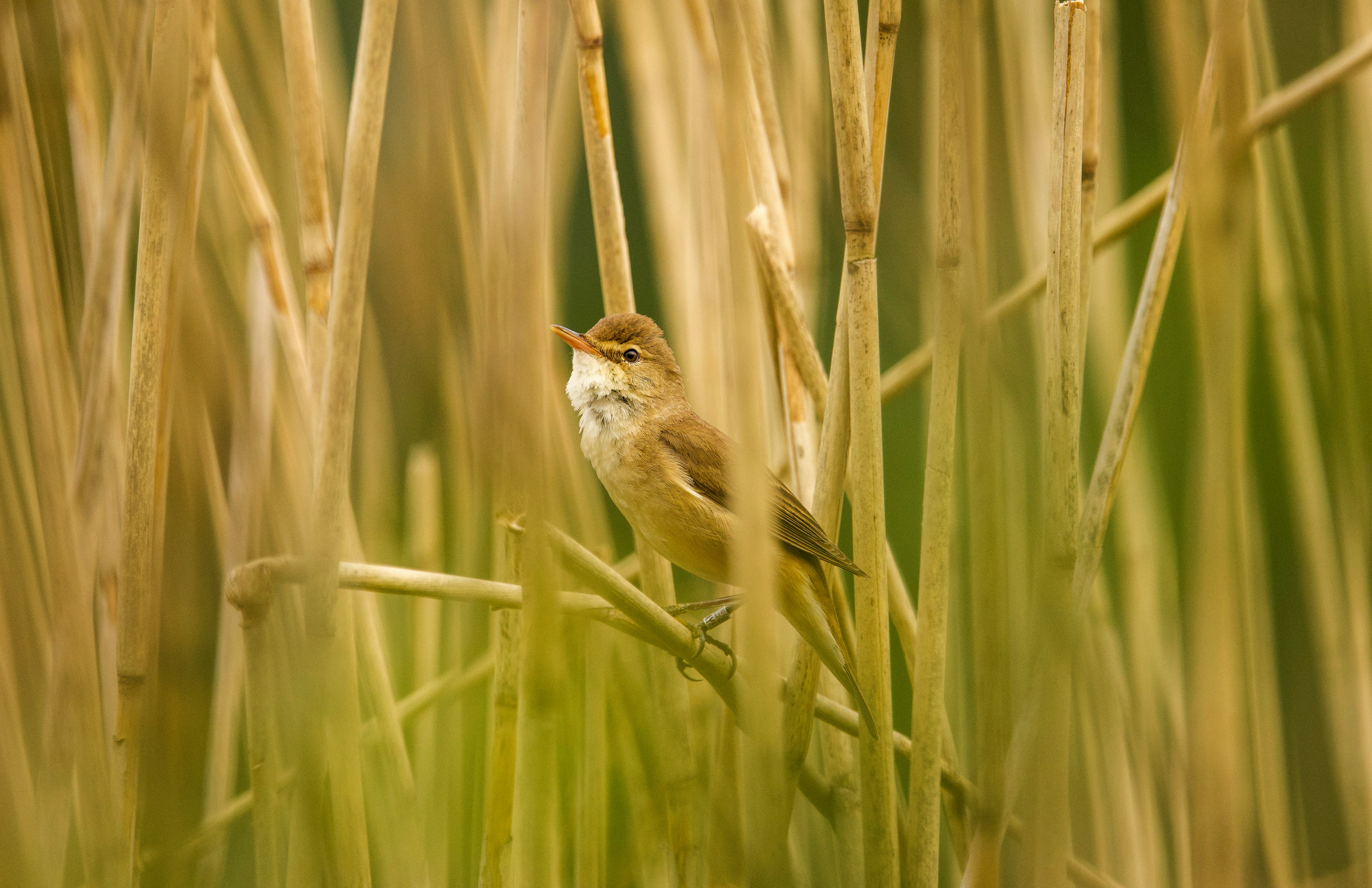
Laghetto del Frassino: a wetland worth discovering

South of Peschiera del Garda, just a few kilometres from our hotel, Laghetto del Frassino is recognised by the Veneto Region as a Natura 2000 site and Special Protection Area. It is a small lake of glacial origin set in a heavily frequented area, yet it preserves important habitats for birdlife. Its importance does not lie in spectacular scenery, but precisely in its ability to provide water, reed beds and tranquillity in a highly populated area. Before visiting, it is advisable to check access points, any restrictions and the condition of the paths on site. Some areas may be private or subject to specific rules. Birdwatching does not give permission to cross fences, enter fields or approach the shore outside the designated paths. A good observation point is one that allows you to watch without altering the animals’ behaviour. This location can also be easily reached by bicycle, by renting one of the electric bikes available to hotel guests at reception.

What you can observe

In a lakeside environment, you may encounter ducks, grebes, coots, moorhens, herons and small passerines associated with reed beds. The species present vary with the seasons and the conditions of the day. It is best to avoid lists presented as guaranteed sightings: uncertainty is part of the experience. A successful outing may simply mean spending a few minutes watching the way a grebe dives or a heron waits motionless.

When to go: morning, light and seasons

The early morning hours are often ideal: there is less activity around, the temperature is pleasant and many species are active. Late afternoon can also offer beautiful light, but in autumn it is important to plan your return carefully. After rain, paths and verges can be muddy; in strong winds the water becomes choppy, bird calls are harder to hear and it is more difficult to hold binoculars steady. In autumn and winter, migratory and wintering birds become particularly interesting to observe. In spring, breeding activity increases and keeping your distance becomes even more important. In summer, the heat makes short outings very early in the morning preferable. Every season has something to teach us, provided that waiting does not turn into an insistent search for a sighting.

What to bring on your first outing

  • Lightweight binoculars, easier to use for long periods than heavy equipment.
  • Clothing in discreet colours, footwear suitable for the terrain and a waterproof layer.
  • Water, sun protection and a small bird guide, either printed or digital.
  • A notebook to record the time, habitat, behaviour and weather conditions.
  • A phone set to silent, useful for maps and environmental photographs without getting too close.

You do not need a telephoto lens to get started. Binoculars teach you to observe; photography can come later. If you use a camera, it is better to miss a shot than to leave the path or cause an animal to move away.

How to observe without disturbing

The first sign to watch for is the animal’s behaviour. If it stops feeding, gives alarm calls, repeatedly moves away or changes direction to avoid us, we are too close. The right response is to step back calmly. Speaking quietly, moving slowly and limiting the amount of time spent in the same place reduces disturbance. Food or recorded calls should never be used to attract birds. Do not look for nests, move vegetation or publicly share the precise locations of sensitive species. Dogs should be kept according to local regulations, with particular care near reed beds and shorelines. All waste, including organic waste, should be taken away with us.
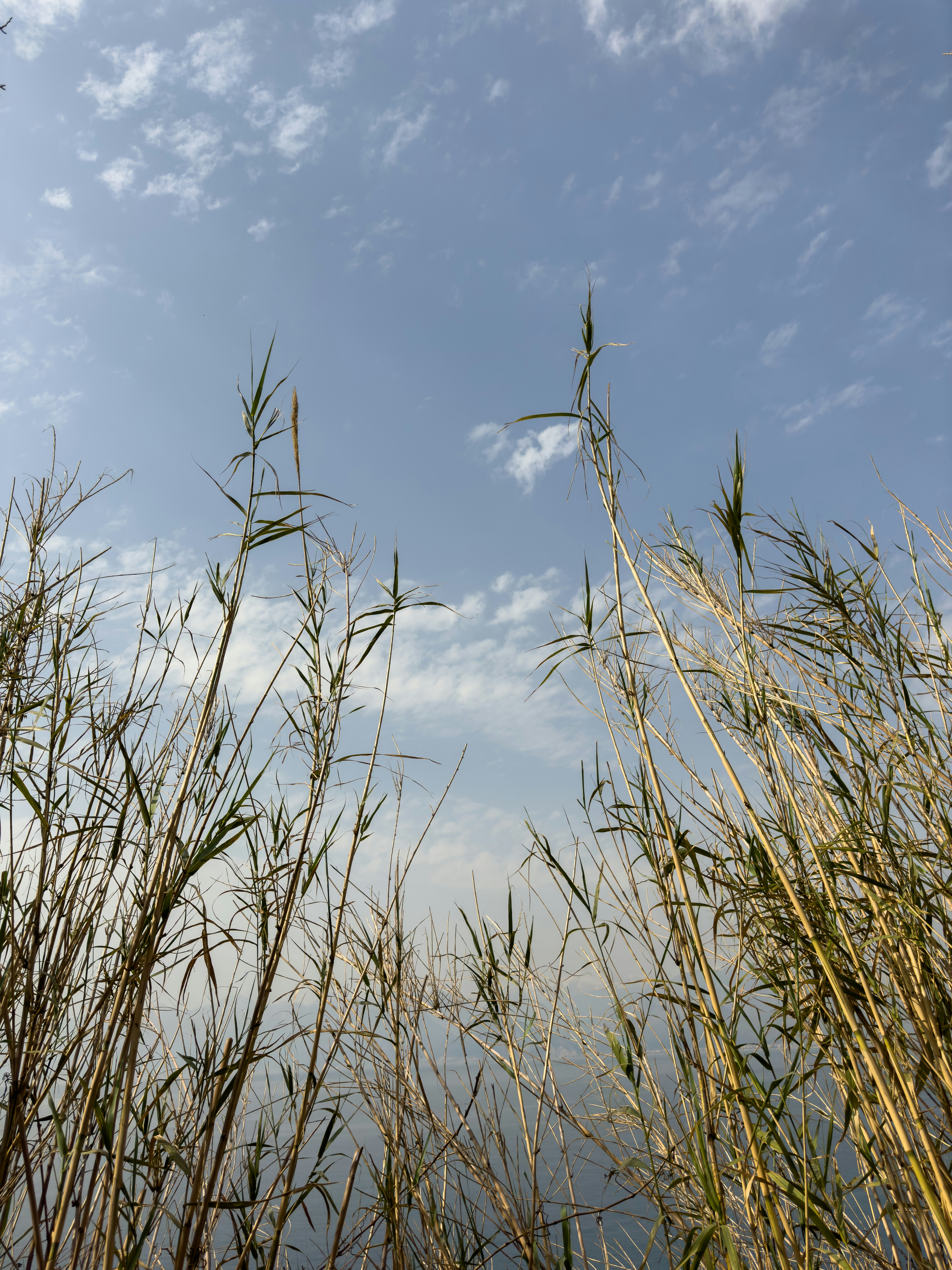
Silence is a tool, not a strict rule

Being silent does not mean making the outing rigid. It means giving yourself the chance to listen. A repeated call, the beating of wings or movement among the reeds often reveals a presence before you can see it. For children, it can become a simple game: counting the different sounds they hear for one minute without immediately trying to name them.

A slow itinerary, without collecting stops

From Lugana, you can dedicate half a day to birdwatching in the lower Lake Garda area, choosing just one environment and allowing yourself plenty of time. Before setting off, check the weather and accessibility; once there, use only public roads and paths and follow the available signs. A short stop along the lake can complete the outing, comparing the species seen in the wetland with those that frequent the open water.

How to identify a bird without being an expert

Start with the most noticeable characteristics: size, shape of the beak, length of the legs, profile in flight and the habitat it frequents. Then observe colours and markings, bearing in mind that light, distance, age and season can be misleading. Taking note of behaviour is very useful: does it swim with its body high or low in the water? Does it dive? Does it walk in shallow water? Does it remain perched among the reeds? If the identification remains uncertain, that is perfectly fine. Guides and apps can help afterwards, especially when your notes are precise.

Seeing Lake Garda from a different perspective

Birdwatching adds depth to a stay because it teaches us to notice what normally remains in the background. Its value lies not in the number of species observed, but in the quality of our attention. A protected wetland, a reed bed and a quiet shoreline remind us that the lake is also a living system, crossed by seasonal movements that begin very far away. Taking home a short list, a few notes and the memory of a behaviour calmly observed is already a rewarding result. On Lake Garda, sometimes the most interesting journey begins when we stop looking for a view and learn to wait.

Frequently asked questions

What is the best time of year for birdwatching on Lake Garda?
Autumn and winter are particularly interesting for migration and wintering birds; spring and summer offer different kinds of activity. Early morning and late afternoon are often the quietest times of day.

Do I need professional equipment?
No. To get started, all you need is a pair of lightweight binoculars, suitable clothing, a guide and a notebook. The ability to remain still and observe is more important than a camera.

Is Laghetto del Frassino a protected area?
It is a Natura 2000 site and a Special Protection Area. Before visiting, you should check access points and local regulations, always remaining on permitted paths.

How can I tell if I am disturbing a bird?
If it stops what it is doing, moves away, changes direction or gives alarm calls, it is time to increase your distance.


Categories

Continue reading

Christmas on the lake, like with family

Christmas on Lake Garda, for us, is first and foremost about home.
It has never been a time of grand gestures or excess, but of daily attentions, of simple things done well, of time spent together. This is how we experience it at the Lugana Parco al Lago e Wine Hotel.

In December, the lake slows down, and so do we. The shores empty, the air becomes clearer, and everything seems to find a different balance. It’s the moment when Lake Garda regains its more intimate side, the one we’ve always known and that locals love most. Walking along the water means recognizing the rhythms of the seasons, observing the softer colors, listening to the silence that settles over the lake. And you can experience all this with a revitalizing stroll in our green lakefront park.

Christmas here is discreet, almost hushed. The villages light up without exaggerating, and the traditions remain the same, passed down from year to year. There’s the pleasure of greeting each other, of stopping for a chat, of rediscovering a sense of community that can sometimes be lost during the busiest months.

Christmas at the hotel is very similar to what we experience at home. The days begin calmly, with a leisurely breakfast. We talk about what we’ll be doing during the day, offer advice, and share our knowledge of the area. There are no rigid schedules, just the freedom to choose how to spend your time. The Municipality of Sirmione offers various activities: the ice skating rink, Christmas concerts with great musicians, but near us you can also discover the typical markets of the Veneto region, starting from Bardolino and Lazise and ending in Verona, with traditional stalls selling artisanal wool hats and freshly made sweets.

Even the evening is a time for sharing. The lights come on early, the atmosphere becomes more intimate, and the lake accompanies every conversation. It’s the kind of Christmas that invites you to be together, to talk, to rediscover the pleasures of simplicity. Our restaurant, La Lugana Trattoria, welcomes you with comforting traditional dishes in a quiet setting, with soft lighting and captivating glasses of wine. You can spend the holidays here with your loved ones, enjoying a special gourmet menu or grilled dishes, prepared in front of you.

Here’s the holiday menu:

Red Balance
Premium red salmon pavé, marinated in smoked pepper salt, glazed with honey and soy, served on a fennel and Tarocco orange emulsion.

Holiday Tradition
Carnaroli risotto, cream of lentils, and roasted cotechino cubes from the Moreniche Hills, creamed in sage butter.

Flavors of the Courtyard
Duck breast stuffed with bread and amaretti, wrapped in fat from the Moreniche Hills, roasted leeks, and a dark clementine base.

Sweet Christmas
Veneziana della Fenice with Tre Filer cream.

For us, opening the hotel doors in December means welcoming guests as if they were coming home. Offering a warm, quiet space where they can feel at ease. A leisurely Christmas on the lake, with the same spirit we share with our families.

Contact us for your personalized offer: info@luganaparcoallago.com or +39 030-919003.

Categories

Continue reading

Discovering the historic villas on Lake Garda: a journey through art, history and nature

Lake Garda is not only a treasure chest of natural wonders, but also a territory rich in history, art and architecture. Among its hills and along its shores are hidden magnificent historic villas, noble residences that tell centuries of elegance, culture and good living. If you stay in our hotel Lugana Parco al Lago & Wine Hotel on Lake Garda, we recommend you take a day (or more!) to discover these gems between the two provinces of Brescia and Verona.

Villas to Visit on the Brescia Shore

  1. Villa Bettoni – Bogliaco di Gargnano
    A masterpiece of Lombard Baroque overlooking the lake. Villa Bettoni is one of the most fascinating historic homes in the area, with terraced gardens, neoclassical statues and 18th-century frescoes. Still inhabited by descendants of the Bettoni family, the villa can be visited by appointment.
  2. Villa Alba – Gardone Riviera and the Vittoriale
    Elegant and majestic, Villa Alba is a perfect example of neoclassical style. Often the site of events and weddings, the villa can be visited during cultural events. But absolutely not to be missed is the nearby Vittoriale degli Italiani, the home-museum of Gabriele D’Annunzio, a place full of charm and symbolism, where the story of the Poet is told between the house and the gardens.
  3. Villa Fenaroli – Rezzato (a few km from the lake)
    A little further inland from Brescia, but easily accessible, Villa Fenaroli is an authentic 18th-century palace. Today it is home to a hotel and conference centre, but it retains its original splendor and is often open to the public for guided tours.

Historic Villas in the Verona Area

  1. Villa Borghese Cavazza (Garda Island)
    Located on a private island, this villa is a true pearl set in the waters of the lake. Owned by the Cavazza family, the villa can be visited with boat tours also organized from the Sirmione peninsula and offers a breathtaking view and dream gardens with a unique and particular microclimate. One of the most exclusive experiences of Garda!
  2. Villa Mosconi Bertani – Negrar (Valpolicella)
    For those who love combining art and good wine, this villa in the heart of Valpolicella (half an hour from the lake) is unmissable. In addition to its architectural beauty, it offers tastings of fine wines and visits to the vineyards. It is considered one of the cradles of Amarone.
  3. Villa Pellegrini Cipolla – Tregnago
    Another splendid Venetian residence, famous for its frescoed halls and centuries-old park. It is often the venue for cultural events and summer concerts.

Extra Tips

  • If you are traveling in the spring or summer, many villas open their gardens to the public with special events and guided tours.
  • Some villas offer unique experiences such as picnics in historic parks, sunset concerts, or wine tours. Check the websites for activities you can do!

How to Organize Your Visit

Many of these villas can be easily reached from our hotel by car or by day trips (just let us know and we will book a taxi for you). Our staff will be happy to help you with reservations, directions or personalized suggestions based on your interests.

Categories

Continue reading

Discover Vinitaly while staying on Lake Garda

If you are a wine enthusiast and want to enjoy a unique experience with tastings, meetings with producers and the latest news in the wine sector, Vinitaly is the unmissable event of the year. This prestigious international wine and spirits fair is held every year in Verona, 25 kilometres from our facilities on the lake, and attracts experts and enthusiasts from all over the world.

Vinitaly: the beating heart of wine in Verona

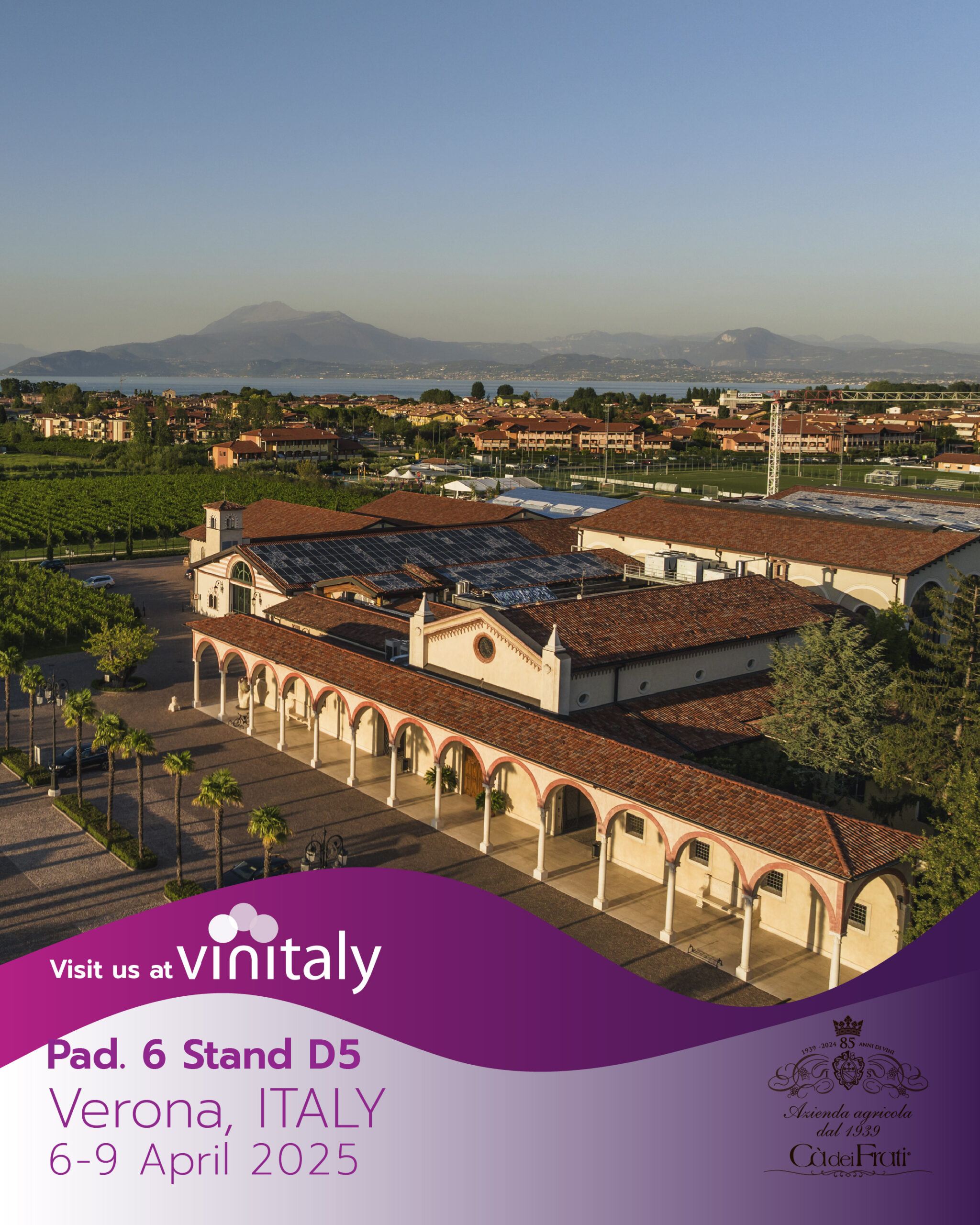
Vinitaly is the largest event dedicated to the world of wine, with over 4,000 exhibitors from more than 30 countries. During the four days of the fair – in 2025 it will be held from 6 to 9 April -, Verona transforms into the capital of wine, offering guided tastings, conferences and workshops aimed at both professionals in the sector and lovers of good wine. Each edition presents the latest trends in the sector, with a particular focus on sustainability, innovation and Italian and foreign excellence. Our winery Ca’ dei Frati will also be there and you can visit us in pavilion 6 at Stand D5.

A stay on Lake Garda between relaxation and comfort

After an intense day among the pavilions of Vinitaly, what could be better than relaxing on the shores of Lake Garda? Our hotels, located just 25 km from the Verona fair, offer a perfect refuge for those who want to combine the experience of the fair with the charm and tranquility of the lake, getting away from the chaos of the city center after a full day. With comfortable rooms, a welcoming atmosphere and services designed for your well-being, our hotels Lugana Parco al Lago and Wine Hotel in Lugana di Sirmione are the ideal choice for your stay during Vinitaly.

How to reach the Verona fair from our facilities

Getting to the fair from our hotel is easy and convenient thanks to the many transport options:

  • Bus: Right in front of our hotels you will find a bus stop that will take you directly to Verona, allowing you to reach the fair without stress. The line is Verona – Brescia and the cost of a ticket is approximately 1.50 euros per ride.
  • Taxi: If you prefer a quicker and more comfortable journey, our staff will be happy to book a taxi for you. However, we ask you to take care to let us know well in advance: taxis in our area are few and often busy, we will take care of booking your ride in advance.
  • Train: The train stations of Peschiera del Garda (or Desenzano del Garda, both 8 kilometers from our facilities) and Verona Porta Nuova offer frequent connections between the city center and Lake Garda. Finally, from Verona Porta Nuova, a free shuttle dedicated to Vinitaly will take you directly to the entrance of the fair.

Book your stay for Vinitaly

Don’t miss the opportunity to experience Vinitaly in maximum comfort! Book your stay at our hotels now and enjoy the best of Italian wine in an enchanting setting like Lake Garda. We are waiting for you, also with a food and wine tour at Ca’ dei Frati!

Categories

Continue reading

What to see in Sirmione in one day

I nostri consigli da local per scoprire il territorio partendo dal nostro hotel a Lugana di Sirmione Sirmione, perla del Lago di Garda come viene definita dal poeta latino Catullo, offre ai visitatori una combinazione unica di bellezze naturali, storia millenaria e cultura affascinante. Ecco una selezione di alcune attrazioni imperdibili che renderanno indimenticabile il vostro soggiorno.

1. Scaligero Castle

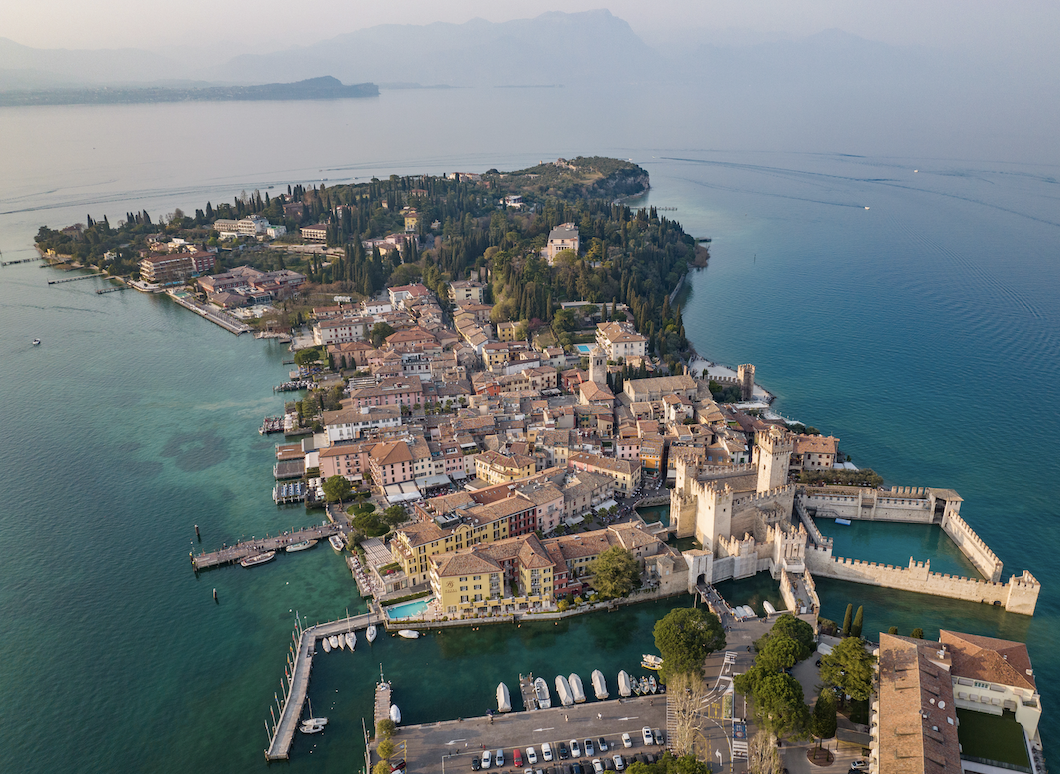
This imposing 13th-century fortress, surrounded by the waters of the lake, is one of the best-preserved examples of a lakeside castle in Italy. The peculiarity is that the village of Sirmione extends right past the drawbridge at the entrance to the castle, thus making Sirmione an island in the past. Its crenellated towers and the drawbridge offer a breathtaking panoramic view of the Sirmione peninsula.
Not to be forgotten: a visit to the ancient church of Sant’Anna al ponte, the mother of Mary, right at the entrance to the bridge. Here, merchants who entered the peninsula in the Middle Ages used to stop for a few moments for a prayer, trying to make trade propitious. The church inside is baroque with two 16th-century frescoes made by local artists: they depict Santa Lucia holding her eyes on a saucer and Sans’Alò, protector of markets and trade.

2. Grottoes of Catullus

At the end of the peninsula that extends into Lake Garda are the remains of a large Roman villa from the 1st century AD, mistakenly attributed to the poet Catullus (a villa earlier than the one visible today probably actually belonged to the poet’s Veronese family). This archaeological site, surrounded by centuries-old olive groves, bears witness to the grandeur of Roman architecture on Lake Garda and offers suggestive views of the lake.
Not to be forgotten: the observation of the underground cistern in the center of the olive grove, made with a stone that allowed the water to drain so as to collect as much water as possible to feed the thermal system present in the villa – in fact, the water was not taken from the thermal source about 200m from the coast in the Lido delle Bionde area; the thermal water in Sirmione was discovered much later in 1900 when the diver Palumbo cooked some eggs during a dive to demonstrate the temperature at which the water came out.

3. Church of San Pietro in Mavino

Situated on one of the three hills of the peninsula, this church dating back to the 8th century is surrounded by vineyards and olive groves and a Lombard cemetery that is now invisible. Inside you can admire frescoes dating from the 12th to the 16th century, while the Romanesque bell tower, built in 1070, adds a further touch of historical charm.
Don’t forget: head towards the high altar, on the left there is a panel of frescoes torn from the wall. Where Saint Michael, the warrior saint, is depicted, against the light you can see some signatures: they are ancient and date back to the passage of the Lanzichenecchi. On the wall on the right instead, in another fresco torn from the wall, there is a rare representation of Saint Anna Metterza, depicting the three generations: Saint Anna, mother of Mary, the Madonna, who in turn holds baby Jesus in her arms.

4. Church of Santa Maria della Neve

Also known as Santa Maria Maggiore, this 15th-century church stands in the heart of the historic center. The terracotta façade and five-arched portico lead to an interior full of votive frescoes and wooden works, including a rare wooden statue of the Madonna enthroned that is said to have been miraculously found in the waters of Lake Garda in front of Sirmione. The interior frescoes all date back to the 16th century and were created by local Lombard-Venetian craftsmen.
Don’t forget: at the entrance on the right, after a few steps, you will find two important figures. The lion of San Marco with its waving tail pointing upwards, a symbol of the stable relations between Sirmione and the Republic of Venice; a little further on, a giant human figure fills the entire wall: it is San Cristoforo, from the Greek “bearer of Christ” who is depicted small on his shoulders, thus making him cross the waters (the word pesce in ancient Greek is in fact the anagram of the name of Christ) full of fish, without difficulty. Saint Christopher was also the saint of the “good death” that everyone ingratiated themselves with first upon entering the church, which is why he was the most visible saint of all.

5. Jamaica Beach

This unique beach, characterized by slabs of limestone rock that emerge from the crystalline water of Lake Garda, offers an out of the ordinary bathing experience. An ideal place to relax and enjoy the natural beauty of the lake. It is a swimming spot without services: it is therefore advisable to bring everything you need and to pay attention to the seabed that can suddenly become deep. The name Jamaica was given by the locals for the particularly clean and crystalline waters reminiscent of those of the Caribbean. In periods when the lake is low, it is possible to walk along the beach thus doubling the Sirmione peninsula at the point where it extends most into the lake.
Don’t forget: to get to this point you can walk along a path directly on the lakeside, very beautiful and relaxing. You will reach a technical plant of the Sirmione spa under which there is a small terminal basin of water with the classic smell of sulfur. Although hordes of tourists bathe here believing they have found the natural origin of Sirmione’s hot water, in reality it is a waste water from the spa itself.

+1 tip: Villa Callas

The summer residence of the famous soprano Maria Callas in the 1950s, this elegant villa represents a piece of musical and local history. Although not open to the public, its façade and surrounding gardens evoke the charm of a bygone era. Legend has it that Callas, in love with Sirmione and its lake, wanted to build a swimming pool in the shape of Lake Garda.

CATEGORIES

Continue reading

Walks around the Fenice

Two proposals for a few hours by the lake

Starting from “La Fenice”, after having enjoyed a good coffee by the lake or after a tasty meal at our Bistrot, we recommend two interesting routes for a simple but relaxing walk:

  • Direction Peschiera: the fisherman’s house
  • Direction Sirmione: historic center

Towards Peschiera: the fisherman’s house

Looking at La Fenice, head towards Peschiera, then right, passing behind the church of Santa Maria di Lugana and continuing along the lake. 

It is a completely pedestrian area that runs along the lake shore, recently renovated. For any small children it is good to pay attention to the fact that it is possible to get access directly to the lake without barriers. 

This walk is also great with pets.

Continue towards Peschiera passing on the wooden piers, the first and longest one crossing a reed bed (look to the left and take a photo on sunny days!), the second and shorter one crossing a “Ganfo”, which is one of the water opening into the lake from inland.

At this point you will find a house entirely painted by some street artists, created thanks to a project in cooperation with the municipality of Sirmione. We continue along the walk dedicated to Margherita Hack (perhaps because in the evening, without street lights, from here you can enjoy a beautiful starry sky, crowned by small lights on the opposite coast of the lake). At the end of this avenue, which has a large green park on the right and the lake on the left, there is the fisherman’s house.

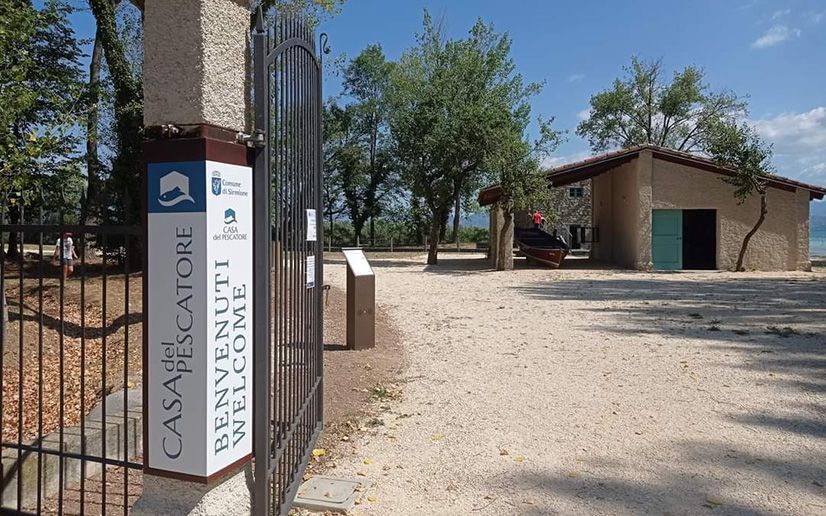
The fisherman’s house is a magical and little-known place in the municipality of Sirmione; recently inaugurated after a deep renovation, to make it a museum open to the public, the house can be visited in the morning and contains historical evidence of one of the most practiced activities in Sirmione in the last century: the fishing. Through the words of a fisherman we retrace the daily life of the house that actually belonged to a local fisherman.

Inside you can find more details for the visit. In addition to the historical interest, from here you can enjoy an exceptional view of the Sirmione peninsula: the colors of the lake and the nature of this corner of the world can provide the necessary relaxation after a long week of work. There is no shortage of benches for short breaks, all overlooking the lake.

If you want to continue further, you will find a public pier on the left that leads through the reed bed towards the lake, from here you can take beautiful photos or relax for a few minutes in the peace of nature.

The walk is approximately 2-3 kilometers long.

Direction Sirmione: historic center

Looking at La Fenice, in this case instead we proceed to the left towards Sirmione. The first part of this walk includes a pavement intended for pedestrians and bicycles, but once you have passed the Migross supermarket, which remains on the left, you can take a pedestrian street on the right which runs directly along the coast.

It is right here that you can make a first stop and read the curious panel that tells of the prehistoric stilt houses, a UNESCO heritage site, which were found on the lakebed of the Lugana Vecchia area and today still there protected lie.

Continuing along the lake you will reach Porto Galeazzi, a small port that connects the pedestrian street with the road for cars that leads directly to the peninsula in the direction of Sirmione. At this point the road towards the castle became the only one available but constantly equipped with a pavement enabling people to reach the historic center on foot.

Continuing in this direction you will find on the right a small clearing where you can relax for a few minutes with some benches overlooking the lake and a century-old plant recognized with a plaque from the municipality of Sirmione. From here the center is no longer far away and to enter the historicity of this place it is necessary to cross the ancient drawbridge of Sirmione scaliger castle and immerse yourself in a medieval atmosphere.

We recommend avoiding the central road of the town bordered by very touristic places and taking an immediate right going around the castle (which is still worth a visit, even if the interior is empty, for a photo up from above the main tower which shows the peninsula and the ancient dock). From here, Via Antiche Mura shows the first houses built in the village, fishermen’s houses near the castle dock, which date back to the Middle Ages.

Continuing slightly uphill you arrive at the church of Santa Maria della Neve, which we recommend visiting for the sixteenth-century frescoes it preserves, created by Lombard-Venetian painters. If you then pass behind the church, you will notice on the right a beautiful little lakeside garden of the parish, ideal for a souvenir photo. Continuing the road, it opens onto a small clearing with a particular signboard: obligation to give a kiss with truly breathtaking scenery!

Then, taking the stairs, you go down to “Spiaggia delle Muse” and from there a walk by the lake takes you to Lido delle Bionde, one of the most beautiful panoramic points of Sirmione. From here you can continue your walk climbing the hill towards the Grotte di Catullo.

You can then choose to visit this ancient Roman archaeological site with a 360° view of the lake and the century-old olive groves, or go down the main road which connects to the historic center along its main (and more touristic and chaotic) street. In this case the journey from the Fenice is quite long: to get to the castle it is about 3-4 kilometers one way, excluding the route within the village walls.

Categories

Continue reading